DAMIEN HIRST — Contemporary Art Provocateur
Damien Hirst (born 1965, Bristol, England) is one of the most consequential and controversial figures in contemporary British art. Known for his provocative use of animals, pharmaceuticals, precious materials, and industrial fabrication, Hirst has spent more than three decades exploring the relationships between art, mortality, commerciality, spectacle, and value. His work challenges the boundaries between high culture and mass culture, luxury and decay, permanence and impermanence which established him as a defining voice among the Young British Artists (YBAs) of the 1990s.
While studying at Goldsmiths College, Hirst curated the groundbreaking 1988 exhibition Freeze, an event now considered a turning point in late-20th-century British art. The participating students would become the YBAs, a radical generation that embraced entrepreneurial self-promotion, conceptual experimentation, and a media-savvy irreverence toward tradition. Among the early visitors to Freeze was collector Charles Saatchi, whose enthusiastic acquisition of Hirst’s work accelerated the young artist’s rise to international attention. By 1991, Hirst mounted his first solo exhibition at Woodstock Street Gallery featuring monochrome canvases and live butterflies, and by 1992 he was central to the landmark YBA exhibition at the Saatchi Gallery.
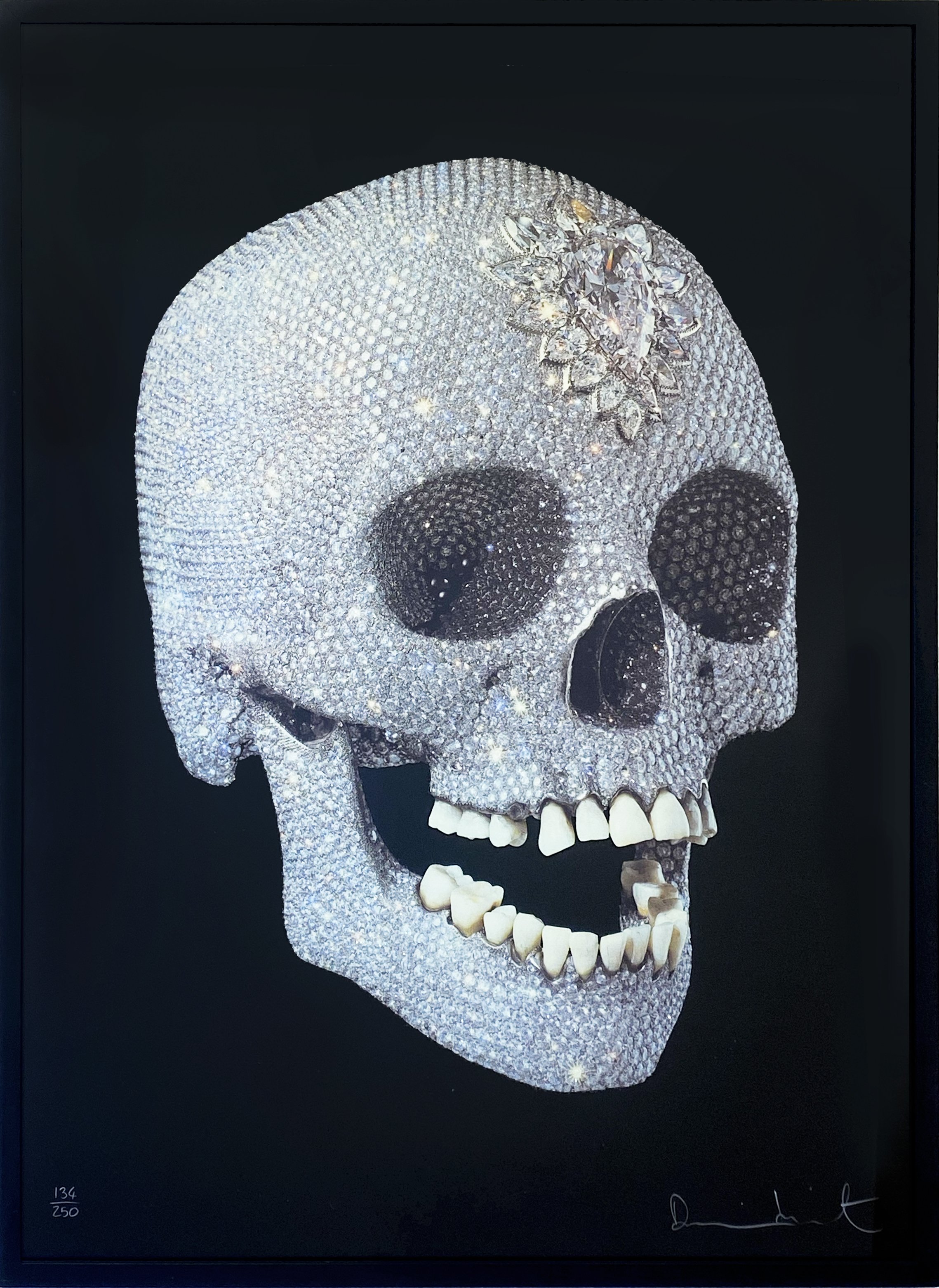
Hirst works across media in sculpture, installation, painting, drawing, and large-scale conceptual projects, but remains best known for his formaldehyde tank sculptures, including his iconic work The Physical Impossibility of Death in the Mind of Someone Living (1991), featuring a preserved tiger shark floating in a monumental glass vitrine. This series, using animals suspended in chemical stasis, examines preservation, spectacle, and the human confrontation with death. His sensational use of materials extends to For the Love of God (2007), a platinum cast of a human skull set with over 1,100 carats of diamonds, which crystallizes his fascination with beauty, luxury, mortality, and the economics of art.
Hirst’s Spot Paintings are meticulous grids of identically sized colored dots named after pharmaceutical compounds, and his Spin Paintings are created using a centrifugal painting machine, reflecting his interest in mass production, consumer culture, and the blurred boundary between the artist’s hand and factory-style fabrication. Like Andy Warhol before him, Hirst openly employs teams of assistants, interrogating authorship and the commodification of artistic labor.






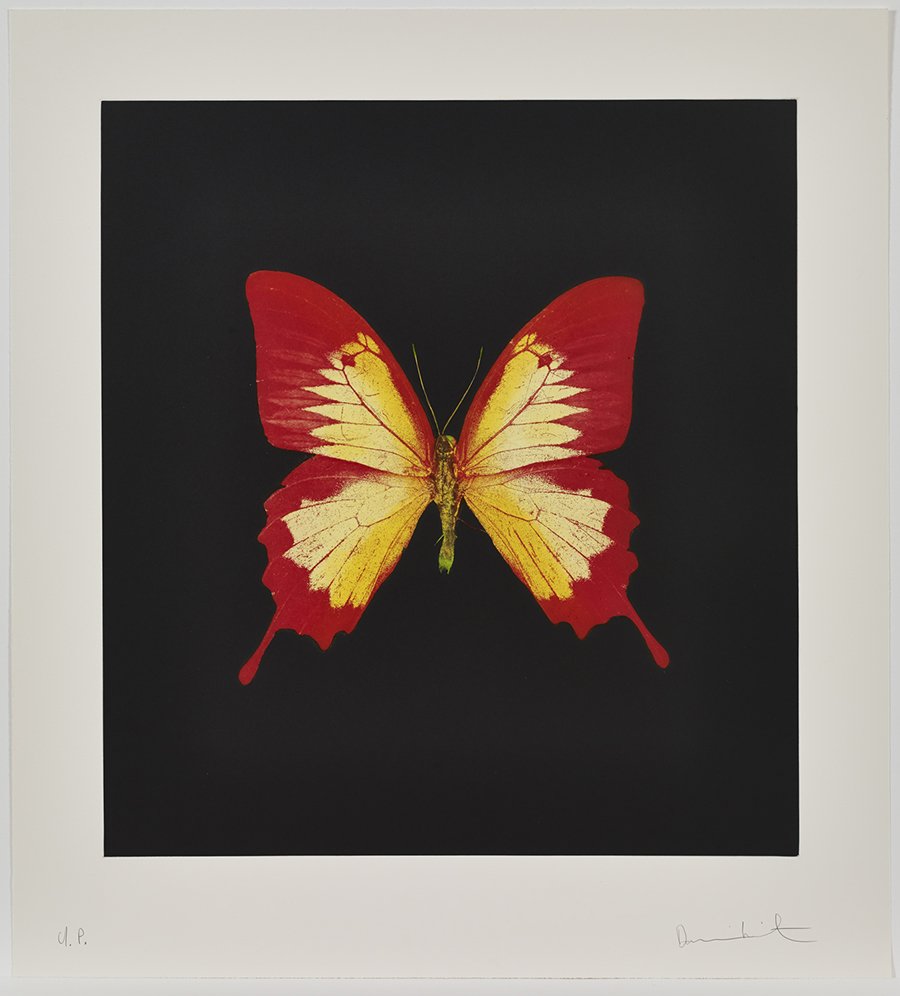


ABOUT DAMIEN HIRST
In 2008, Hirst made art-market history by bypassing galleries and selling an entire new body of work directly through Sotheby’s in the landmark auction Beautiful Inside My Head Forever, raising approximately £111 million. This unprecedented move further cemented his status as both an artistic provocateur and a shrewd architect of his own market.
Damien Hirst’s work is held in major public institutions worldwide, including the Tate (London), the Museum of Modern Art (New York), the Hirshhorn Museum and Sculpture Garden (Washington, D.C.), the Stedelijk Museum (Amsterdam), SFMOMA (San Francisco), and Newport Street Gallery in London, and Hirst’s own museum, which houses both his work and selections from his extensive personal collection. Polarizing, influential, and endlessly discussed, Hirst remains a central figure in global contemporary art.
Explore Damien Hirst at DTR Modern Galleries
DTR Modern Galleries is proud to feature works by Damien Hirst, offering collectors the opportunity to acquire pieces from one of the most influential contemporary artists of the 21st century, with access to Hirst’s publishers in London directly. You can find his work in our Boston, NYC, Palm Beach and our Washington D.C. gallery locations.